
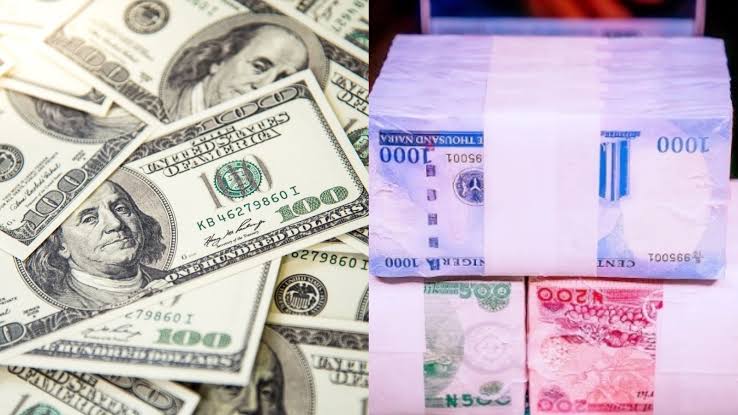
Dollar to Naira Exchange Rate Today January 14, 2026, What Is Driving the Gap

Advertisements
Dollar to Naira Exchange Rate Today, Wednesday, January 14, 2026: Official and Black Market Rates, What Is Driving the Gap
The dollar to naira exchange rate on Wednesday, January 14, 2026, reflects the continued structural tension within Nigeria’s foreign exchange market, with a wide disparity persisting between the official rate and prices quoted in the parallel market. The divergence underscores unresolved liquidity constraints, demand pressures, and the limits of recent foreign exchange reforms aimed at unifying the market and restoring confidence.
As of midweek trading, the naira continues to trade significantly weaker in the informal market compared with the Central Bank of Nigeria’s recognised official windows. This gap has implications for inflation, import costs, public finances, and household purchasing power, reinforcing the exchange rate as one of the most closely watched macroeconomic indicators in Nigeria.
Advertisements
Dollar to Naira Exchange Rate Today: The Snapshot
In the official market, including the Nigerian Autonomous Foreign Exchange Market (NAFEM) and interbank trading windows, the naira is exchanging at approximately ₦1,420 to ₦1,425 per United States dollar. Transactions within this band reflect moderated volatility compared with previous months, supported by periodic interventions and administrative controls.
In contrast, the dollar commands a substantially higher price in the parallel market. On Wednesday, January 14, 2026, street traders and Bureau De Change operators quoted the dollar at around ₦1,485 to ₦1,495 for buying and ₦1,500 to ₦1,505 for selling, depending on location and transaction volume.
Advertisements
Ejes Gist News reports that the sustained premium between the two markets remains above ₦70 per dollar, signalling persistent demand pressure outside official channels.
Why the Dollar to Naira Exchange Rate Matters
The dollar to naira exchange rate is not merely a financial statistic. It is a central transmission mechanism for economic stress and policy outcomes in Nigeria.
Nigeria’s import-dependent economy relies heavily on foreign exchange to fund the purchase of refined petroleum products, industrial machinery, pharmaceuticals, food items, and consumer goods. A weaker naira increases the local currency cost of these imports, directly feeding into inflation and eroding household incomes.
Dollar to Naira Exchange Rate Today Tuesday, January 13, 2026
For businesses, exchange rate uncertainty complicates pricing, contract planning, and investment decisions. For government, it affects debt servicing costs, particularly for dollar-denominated obligations, and shapes fiscal sustainability.
Official Exchange Rate: Structure and Constraints
The official dollar to naira exchange rate is determined within regulated windows supervised by the Central Bank of Nigeria. These include the NAFEM platform, where authorised dealers, banks, and large corporates transact foreign exchange under defined rules.
In theory, the rate is expected to be market-determined. In practice, supply remains heavily influenced by oil export receipts, central bank interventions, and administrative allocations.
Nigeria’s foreign exchange earnings are overwhelmingly derived from crude oil exports. Any disruption in oil production, pricing, or repatriation of proceeds directly constrains dollar supply in the official market. Although global oil prices remain a factor, domestic production challenges, pipeline vandalism, and operational inefficiencies continue to limit the volume of dollars available.
As a result, official market supply often falls short of aggregate demand from importers, manufacturers, airlines, and other foreign exchange users.
Parallel Market Dynamics and Demand Pressures
The black market, also referred to as the parallel or informal foreign exchange market, operates outside direct regulatory oversight. Prices are determined by immediate supply and demand conditions, making the market highly responsive to liquidity shortages in the formal system.
Demand in the parallel market is driven by several factors:
- Importers unable to access dollars through banks.
- Individuals seeking foreign currency for travel, education, or medical expenses.
- Speculative demand driven by expectations of further naira depreciation.
- Businesses hedging against future currency risk.
Supply, on the other hand, largely comes from diaspora remittances, informal export proceeds, and private holdings of foreign currency.
The persistent premium of the parallel market over the official rate indicates that demand for dollars continues to exceed supply in regulated channels.
Inflation and Cost of Living Implications
The exchange rate remains a primary driver of Nigeria’s inflation trajectory. As the naira weakens, the cost of imported goods rises, and these increases are passed on to consumers.
Food inflation, in particular, remains sensitive to exchange rate movements due to Nigeria’s reliance on imported agricultural inputs such as fertiliser, agrochemicals, machinery, and processed food items. Energy costs are also affected, as fuel imports and gas pricing are dollar-linked.
For households, this translates into higher prices for basic necessities, reduced purchasing power, and increased financial strain, particularly among low- and middle-income earners.
Impact on Businesses and Investment
For the private sector, the dollar to naira exchange rate shapes profitability and competitiveness. Manufacturers dependent on imported raw materials face rising input costs, squeezing margins or forcing price increases that dampen demand.
Foreign investors closely monitor exchange rate stability as a proxy for macroeconomic risk. Persistent volatility and wide market differentials discourage portfolio inflows and complicate foreign direct investment decisions, particularly in capital-intensive sectors.
Airlines, telecommunications firms, and energy companies with dollar-denominated obligations are especially exposed, as exchange losses can materially affect balance sheets.
Government Finances and Debt Servicing
Nigeria’s public finances are also exposed to exchange rate movements. External debt servicing costs rise as the naira weakens, placing additional pressure on fiscal resources.
Although debt service ratios are influenced by revenue performance, a weaker currency increases the naira value of dollar repayments, reducing funds available for capital expenditure and social services.
This dynamic has heightened scrutiny of borrowing strategies and underscored the importance of improving foreign exchange earnings through non-oil exports.
Central Bank Policy and Market Confidence
The Central Bank of Nigeria has implemented several reforms aimed at improving transparency and restoring confidence in the foreign exchange market. These include adjustments to trading windows, efforts to clear outstanding FX backlogs, and measures to attract foreign capital.
However, the persistence of a wide gap between official and parallel rates suggests that structural challenges remain unresolved. Market participants continue to assess the credibility of policy signals, the adequacy of reserves, and the sustainability of intervention strategies.
Confidence remains fragile, and expectations of future depreciation continue to influence behaviour in both markets.
Diaspora Remittances and External Flows
Diaspora remittances represent a significant source of foreign exchange inflows into Nigeria. However, the effectiveness of remittances in supporting the official market depends on incentives for senders to use formal channels.
When the official exchange rate is perceived as uncompetitive, remittance flows are often diverted to informal channels, reinforcing parallel market liquidity while depriving the formal system of much-needed supply.
Efforts to align rates and improve confidence are therefore critical to capturing these inflows within the regulated framework.
The Exchange Rate and Everyday Nigerians
Beyond macroeconomic indicators, the dollar to naira exchange rate has become a daily concern for ordinary Nigerians. Price changes in markets, transport fares, school fees, and medical costs are increasingly linked, directly or indirectly, to movements in the exchange rate.
For small businesses and traders, currency volatility complicates planning and inventory management. For students studying abroad or families paying foreign tuition fees, exchange rate shifts can significantly increase financial obligations.
The exchange rate has thus become a central feature of economic discourse and household decision-making.
What Analysts Are Watching
Market analysts continue to monitor several indicators that could influence the dollar to naira exchange rate in the coming months:
- Trends in crude oil production and export receipts.
- Central Bank foreign reserve levels and intervention capacity.
- Policy consistency and clarity from monetary authorities.
- Inflation data and interest rate decisions.
- Global financial conditions and emerging market sentiment.
Each of these factors has the potential to either stabilise the naira or intensify depreciation pressures.
Understanding Today’s Rates
It is important to distinguish between the different exchange rates quoted across Nigeria’s foreign exchange ecosystem.
- The official rate applies to transactions conducted through banks and authorised dealers under regulatory supervision.
- The parallel market rate reflects informal, cash-based transactions and often serves as a real-time indicator of currency scarcity.
- Rates may vary by location, transaction size, and payment method.
Individuals and businesses are advised to verify rates from credible sources before undertaking foreign exchange transactions.
What you should know
The dollar to naira exchange rate on Wednesday, January 14, 2026, encapsulates Nigeria’s broader economic challenge: balancing foreign exchange demand with constrained supply in a complex and evolving policy environment.
While official rates suggest relative stability within controlled parameters, the elevated parallel market rate highlights ongoing pressure points that reforms have yet to fully resolve. The exchange rate remains both a symptom and a driver of Nigeria’s economic realities, with implications that extend from government balance sheets to household budgets.
As long as structural constraints persist, the dollar to naira exchange rate will continue to command national attention, shaping economic outcomes and policy debates across the country.
