
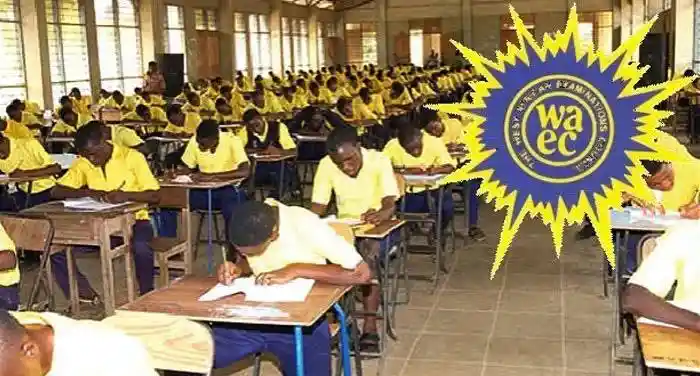
EXCLUSIVE: Over 65% of Delta’s WAEC Candidates Risk Disqualification as New Commissioner’s Directive Sparks Crisis

Advertisements
By Omagbemi Oghenetega
Thousands of secondary school students in Delta State face possible exclusion from the 2026 West African Examinations Council (WAEC) examinations following a policy directive issued by the Commissioner for Secondary Education, Dr. Kingsley Nze Ashibogwu.
Education officials and school administrators say the directive has disrupted the established process for clearing a large category of candidates classified as “external students,” a group that forms a significant proportion of WAEC applicants in the state.
Advertisements
Ejes Gist News reports that the order, introduced after the commissioner assumed office on January 16, 2026, centralized approval for candidate clearance and suspended the decentralized system previously managed through local education offices across the state.
Also Read: Dollar to Naira Exchange Rate Today, Thursday, February 5, 2026
Advertisements
Who Are Classified as External Students
Contrary to public perception, the category of external students does not refer only to private candidates writing WAEC independently. Education administrators confirm that the classification includes:
- Students who transferred from one school to another during the enrollment period
- Candidates who completed preliminary registration but delayed final enrollment due to financial constraints
- Students added by schools to meet WAEC minimum candidate requirements
Principals estimate that these groups constitute more than 65 percent of candidates registered to write the 2026 WAEC examination in Delta State.
Previous Enrollment Structure
For more than a decade, WAEC enrollment in Delta State followed a three-step administrative procedure.
Schools first presented candidates to the office of the Chief Inspector of Education (CIE) in their respective local government areas for initial verification. Approved lists were then forwarded to the State Exams and Standards Department for final clearance before schools proceeded to WAEC offices for payment and upload of candidates’ data.
Education stakeholders describe the process as orderly, predictable, and accessible to both public and private schools.
Centralization Triggers Administrative Conflict
Multiple sources within the education system say the crisis began after disagreements emerged between officials of the State Exams and Standards Department and local government Chief Inspectors of Education over control of candidate clearance.
Following the dispute, the commissioner issued a directive requiring that all WAEC candidate approvals must originate directly from his office, with an explicit restriction on clearing external candidates.
The change has effectively halted the processing of thousands of students who had already completed biometrics and other preliminary requirements.
A school principal in Asaba, who requested anonymity due to fear of administrative reprisals, said the directive could have severe consequences.
“If this policy is not reversed immediately, more than 65 percent of our students will not be able to participate in the 2026 WAEC examination. Many have already paid fees and completed registration steps,” the principal said.
Why Schools Enroll External Candidates
Administrators explain that the inclusion of external candidates has become a practical necessity for many schools.
According to them, additional candidates enable schools to:
- Meet WAEC’s minimum enrollment threshold and avoid penalties for low candidature
- Share logistical costs associated with processing documents in Asaba
- Offset mandatory administrative charges imposed by WAEC
Without the ability to enroll such candidates, many schools say they will be unable to meet financial obligations attached to WAEC registration.
Parents Express Growing Anxiety
Parents and guardians across Delta State have expressed frustration over the uncertainty created by the directive.
Several parents interviewed confirmed that they had already paid various registration fees and were awaiting final clearance when the new policy was announced.
“We borrowed money to complete these payments. Now we are hearing our children may not write WAEC. This is devastating for families,” a parent in Ughelli said.
Calls for Government Action
Education stakeholders, including school proprietors, civil society groups, and community leaders, are calling for urgent intervention by the Delta State Government to resolve the impasse.
Advocates warn that the directive could undermine the academic progression of an entire cohort of students if not reviewed promptly.
They are urging Governor Sheriff Oborevwori to convene an emergency meeting involving the Ministry of Secondary Education, WAEC officials, and representatives of school administrators to establish a transparent and workable clearance process.
Silence From the Ministry
As of publication, the Ministry of Secondary Education has not issued a formal statement explaining the directive or outlining an alternative pathway for affected candidates.
The absence of official clarification has intensified confusion within schools and heightened fears of mass disqualification.
Race Against Registration Deadline
WAEC enrollment windows operate on fixed schedules, and administrators warn that the remaining time for processing candidates is limited.
Without an immediate policy adjustment or clear guidelines from the state government, thousands of students in Delta State could be denied access to the 2026 examination, one of the most important academic assessments in the country.
Education observers describe the situation as one of the most significant administrative challenges to confront the state’s secondary education system in recent years.
Ejes Gist News continues to monitor developments and will provide updates as the situation unfolds.
