
Tinubu Declares: Nigerians Are Benefiting More From My Government
Advertisements
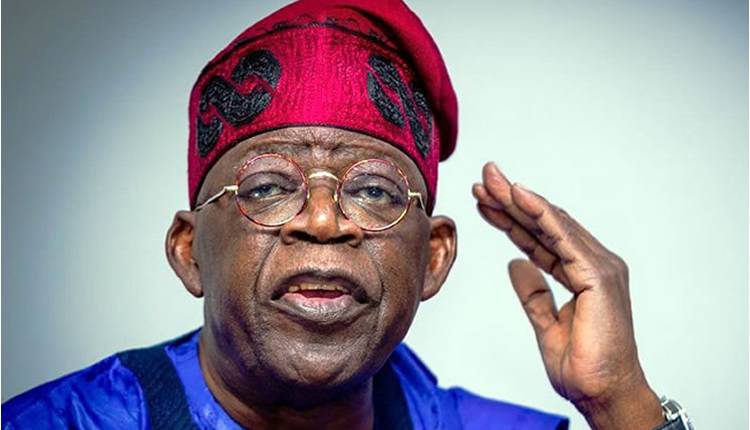
President Bola Ahmed Tinubu yesterday assured Nigerians that his administration would intensify its ongoing efforts to translate improving macroeconomic indicators into tangible, better living conditions for citizens across the country.
The President declared that the national economy has now been placed on an “irreversible path” towards growth that individual households will directly experience at their dining tables and in their pockets.
President Tinubu announced that the Federal Government would, within the next few weeks, introduce targeted measures specifically aimed at assisting vulnerable Nigerians. These incoming initiatives will include:
Advertisements
- Cheaper means of transportation to reduce daily commuting costs;
- Increased food production to boost supply and stabilize prices; and
- Targeted relief programmes designed to directly reach citizens at the grassroots level.
President Tinubu gave these assurances in his official reaction to the latest Gross Domestic Product (GDP) figures released yesterday by the National Bureau of Statistics (NBS).
The official NBS report reveals that the Nigerian economy grew by 4.43 per cent in the second quarter of 2026, representing an expansion when compared with the 4.23 per cent growth rate recorded in the corresponding second quarter of 2025.
According to a statement issued by his official spokesman, Bayo Onanuga, the President welcomed the newly released statistics as further concrete evidence that the comprehensive economic reforms undertaken by his administration since May 2023 are yielding positive results.
Advertisement
“Under our watch, the economy is on the irreversible path to experience even more growth that all homes will feel at the dining table and in their pockets. We are not resting on our oars.”
“We are fully committed to translating consistent, stronger economic performance into better microeconomic outcomes for our citizens. We must stay vigilant by ensuring the sustainable progress we are recording remains irreversible,” President Tinubu stated.
Core Economic Indicators and Sectoral Performance
According to the detailed report made public by the National Bureau of Statistics, economic growth during the period was recorded across key sectors, including agriculture, manufacturing, oil and gas, and services. The services sector maintained its long-standing position as the single largest contributor to Nigeria’s aggregate GDP.
In nominal terms, Nigeria’s aggregate Gross Domestic Product rose to N119.27 trillion in the second quarter, representing an 18.43 per cent increase from the N100.7 trillion recorded in the corresponding period of 2025.
Reflecting on the journey so far, President Tinubu emphasized that his administration had spent the past three years taking difficult decisions that were absolutely necessary to stabilize the national economy.
Advertisements
“In the past three years, we tried to do the hard part by implementing the necessary reforms to stabilise the economy.”
“Now the economy is stabilised, and we have laid the foundation for a prosperous nation. We didn’t do the reforms to create challenges, but to ensure prosperity reaches all our people,” the President explained.
The President pointed out that the latest GDP growth figures represent just one among a broader series of indicators confirming that his administration’s Renewed Hope Agenda is delivering concrete outcomes. He specifically highlighted several major achievements across the economic landscape:
- Improvements in the nation’s external reserves, which have reached their highest level in 17 years;
- A positive national trade position characterized by recorded trade surpluses;
- Upward movements in Nigeria’s credit ratings by several notches;
- Substantial ongoing infrastructure development across the country; and
- Sustained increases in oil and gas production volumes.
“The results of the efforts are becoming very clear to all: The Renewed Hope Agenda is working. Because of those tough decisions, today Nigeria has trade surpluses. Our foreign reserves are at their highest in 17 years. Our credit rating has moved up several notches.”
“We are building roads, railways and superhighways that will last for a long time. Investors who left are returning. Oil and gas production is increasing,” President Tinubu declared.
In addition to financial and industrial metrics, President Tinubu cited positive developments within the national education sector as further compelling evidence of progress. He highlighted that Nigerian universities have enjoyed unprecedented stability, while the Nigerian Education Loan Fund (NELFUND) has been actively expanding access to tertiary education nationwide.
“And in our universities, for the first time in a long time, there are no strikes. Our children are in class. And through NELFUND, student loans are putting education within reach, and affordable credit is going to our civil servants through Creditcorp,” he noted.
The President affirmed that the upcoming phase of his administration’s economic strategy will place even greater emphasis on alleviating the financial pressures confronting vulnerable Nigerians, ensuring that improving macroeconomic figures directly translate into tangible benefits on the ground.
“In the next few weeks, we are addressing some of the challenges being faced by our vulnerable population by providing cheaper means of transport, ramping up food production and implementing various relief programmes that will touch lives at the grassroots,” President Tinubu said.
During his address, President Tinubu also took a swipe at opposition figures, pointing out that the positive economic statistics arrived at a moment when opposition elements were actively attempting to diminish the documented achievements of his administration and promising to reverse key reforms if elected to office.
He maintained that the policy choices implemented since the start of his administration were never intended to impose hardship on Nigerians, but were instead designed to correct deep structural weaknesses and build a solid foundation for sustainable national prosperity. The President pledged that his administration will remain fully focused on consolidating all gains recorded thus far.
Comprehensive Sectoral Breakdown and Production Metrics
The official GDP report from the National Bureau of Statistics confirms that the 4.43 per cent growth recorded in the second quarter of 2026 outperformed both the growth rate of the first quarter of 2026 and the corresponding second quarter of 2025.
The NBS report detailed a broad-based economic expansion across the Nigerian economy, driven by significant improvements in the agricultural segment, the non-oil sector, and the services sector, alongside sustained growth in the oil sector.
| Economic Sector / Metric | Q2 2025 Performance | Q1 2026 Performance | Q2 2026 Performance |
|---|---|---|---|
| Aggregate GDP Growth Rate | 4.23% | — | 4.43% |
| Agricultural Sector Growth | 2.82% | — | 4.39% |
| Non-Oil Sector Growth | 3.64% | 3.94% | 4.31% |
| Oil Sector Growth Rate | 20.46% | 2.57% | 7.31% |
| Industrial Sector Growth | 7.46% | — | 3.96% |
| Average Daily Crude Oil Production | 1.68 mbpd | 1.55 mbpd | 1.72 mbpd |
| Oil Sector Share of Real GDP | 4.05% | 3.92% | 4.16% |
| Non-Oil Sector Share of Real GDP | 95.95% | 96.08% | 95.84% |
| Services Sector Share of Real GDP | 56.53% | — | 56.62% |
A closer look at specific sector performances reveals key drivers across the economy:
- Agricultural Sector: The agricultural segment almost doubled its growth performance, posting a 4.39 per cent growth rate in the second quarter of 2026 compared with the 2.82 per cent recorded in the corresponding period of 2025.
- Non-Oil Sector: Accounting for approximately 96 per cent of the total Nigerian economy, the non-oil sector grew by 67 basis points to reach 4.31 per cent in the second quarter of 2026, up from 3.64 per cent recorded in the second quarter of 2025 and 3.94 per cent achieved in the first quarter of 2026. This performance was driven by activity across crop production, telecommunications, real estate, trade, financial institutions, cement manufacturing, and construction.
- Oil Sector: The oil sector recorded a growth of 7.31 per cent in the second quarter of 2026. While this was higher than the 2.57 per cent recorded in the first quarter of 2026, it was lower than the 20.46 per cent growth reported in the second quarter of 2025.
- Industrial Sector: The industrial sector expanded by 3.96 per cent in the second quarter of 2026, compared to the 7.46 per cent growth registered in the comparative period of 2025.
Regarding energy production, average daily crude oil production rose to 1.72 million barrels per day (mbpd) in the second quarter of 2026, outperforming both the preceding first quarter of 2026 and the comparable second quarter of 2025. This production volume represents the highest daily crude oil output recorded in Nigeria since 2022. For comparison, oil production stood at 1.68 mbpd in the second quarter of 2025 and 1.55 mbpd in the first quarter of 2026.
Consequently, the oil sector contributed 4.16 per cent to aggregate real GDP in the second quarter of 2026, showing a sustained improvement from the 4.05 per cent recorded in the corresponding period of 2025 and the 3.92 per cent recorded in the first quarter of 2026.
Financial Dynamics and GDP Share Breakdown
In nominal terms, total aggregate Gross Domestic Product expanded by 18.43 per cent, rising from N100.73 trillion in the second quarter of 2025 to N119.29 trillion in the second quarter of 2026.
When evaluated by relative sector shares of aggregate GDP:
- The services sector remained the dominant structural driver of the economy, accounting for 56.62 per cent of aggregate GDP in the second quarter of 2026, compared to 56.53 per cent in the comparable period of 2025.
- The non-oil sector contributed 95.84 per cent to aggregate real GDP in the second quarter of 2026, compared with 95.95 per cent in the second quarter of 2025 and 96.08 per cent in the first quarter of 2026.
Financial Analysts and Economic Experts Evaluate GDP Report
Economic experts and financial analysts were unanimous in their assessment that the latest official GDP report points to a positive overall outlook for the Nigerian economy.
Analysts at SCM Capital observed that the second-quarter 2026 GDP figures underline improving macroeconomic conditions and broad-based policy support, which have continued to anchor domestic economic performance. They noted that the data demonstrates broad-based economic resilience, highlighted by an uptick in oil output reflecting gradual operational improvements and sustained field activity across major production basins, alongside a non-oil sector that is gaining stronger momentum.
Similarly, analysts at Coronation Group and Cordros Capital Group noted that the second-quarter GDP performance outpaced their initial projections, emphasizing that the Nigerian economy has demonstrated steady growth and resilience.
“Overall, the data points to sustained economic resilience, with growth anchored by the services sector alongside gradual improvement across non-oil activities.”
“The outturn affirms our broader expectation of a steady, non-oil-led growth trajectory through the rest of the year,” analysts at Coronation Group stated.