
Nigeria’s First Lady Is a Pastor Who Rejects Christian Genocide Claims, but the Persecution Is Real
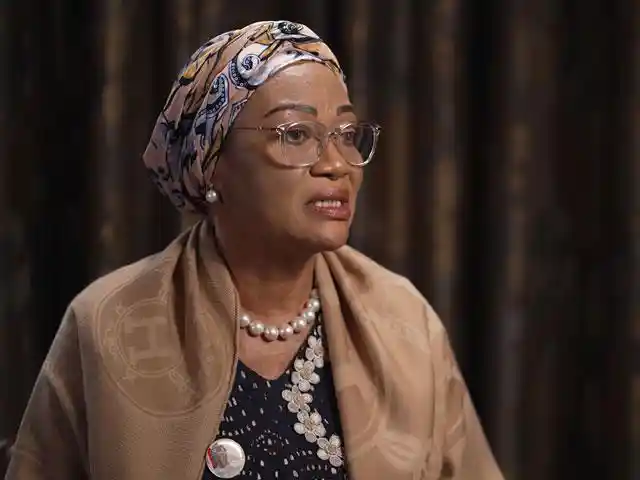
Nigeria’s First Lady Oluremi Tinubu Rejects Christian Genocide Claims Amid Ongoing Violence
Nigeria’s First Lady, Oluremi Tinubu, has rejected assertions that Christians are facing genocide in Nigeria, despite mounting international reports documenting sustained attacks on Christian communities across parts of the country.
In an interview conducted in Washington, Tinubu dismissed claims that Christians are being systematically exterminated, describing the violence as a product of terrorism, banditry, poverty and longstanding regional instability rather than a coordinated religious cleansing.
Ejes Gist News reports that her remarks come amid intensified global scrutiny of Nigeria’s security crisis and renewed debate in policy circles in the United States over whether the killings amount to genocide.
“I don’t think so,” she said when asked directly about allegations of genocide, arguing that extremist groups may exploit religious narratives for propaganda purposes.
Christian Genocide Claims in Nigeria: What the Data Shows
Nigeria has witnessed more than a decade of insurgency, banditry and communal clashes, particularly in the North-East and North-West regions. Armed groups including Boko Haram and Islamic State West Africa Province (ISWAP) have carried out attacks targeting both Muslim and Christian communities.
However, advocacy groups argue that Christians bear a disproportionate share of the violence.
According to the World Watch List published by the Christian advocacy organization Open Doors, Nigeria accounts for more than 70 per cent of Christians killed worldwide in recent reporting cycles. The report documents:
- Church attacks and mass casualty incidents
- Kidnappings of clergy and worshippers
- Destruction of homes and farmland
- Forced displacement of Christian communities
Security analysts note that violence in Nigeria often overlaps with land disputes, farmer-herder conflicts, and criminal kidnapping networks, complicating efforts to classify incidents strictly along religious lines.
Oluremi Tinubu’s Position on the Crisis
Tinubu, an ordained Pentecostal pastor and wife of President Bola Tinubu, maintained that framing the crisis solely as genocide oversimplifies a multifaceted security emergency.
She argued that terrorism and organized criminality are primary drivers, warning that repeated international characterization of the conflict as “Christian genocide” could influence how extremist groups select targets.
Her remarks highlight Nigeria’s complex religious demography:
- The northern region is predominantly Muslim.
- The southern region is largely Christian.
- Several central states remain religiously mixed and experience frequent communal clashes.
Tinubu also referenced her interfaith marriage as an example of coexistence in a country often portrayed as sharply divided along religious lines.
U.S. Intervention and International Response
The debate over Christian persecution intensified following U.S. military action against terrorist elements in Nigeria. Former U.S. President Donald Trump authorized targeted strikes against Islamic State-linked fighters operating in parts of Nigeria after reported attacks on Christian communities.
Tinubu expressed gratitude for the U.S. action, stating that recent joint efforts between Nigerian security agencies and international partners contributed to improved security during key religious periods.
Diplomatic engagement between Abuja and Washington has included:
- Expanded intelligence sharing
- Joint military coordination
- Plans to recruit approximately 20,000 additional police and security personnel
During her visit to Washington, Tinubu attended the National Prayer Breakfast, where she received public recognition from U.S. officials for her role as both First Lady and pastor.
Critics Question Government Response
Despite government assurances, critics argue that security interventions remain insufficient relative to the scale of violence.
Human rights observers cite:
- Tens of thousands killed over more than a decade
- Millions internally displaced
- Entire communities abandoned due to insecurity
Some Nigerian Christian leaders continue to describe the situation as targeted religious persecution, while others frame it as a broader collapse of rural security affecting multiple faith groups.
Security experts caution that labeling the crisis as genocide carries significant diplomatic and legal implications under international law, potentially triggering obligations under the Genocide Convention. However, genocide classification requires proof of specific intent to destroy a protected group in whole or in part — a threshold that remains debated among analysts.
The Broader Security Landscape
Nigeria’s insecurity spans multiple threat actors:
- Islamist insurgent groups in the North-East
- Armed bandit networks in the North-West
- Farmer-herder conflicts in the Middle Belt
- Separatist tensions in the South-East
While many attacks target Christian communities, Muslim civilians have also suffered mass casualties in terrorist assaults, complicating narratives that frame the crisis as exclusively anti-Christian.
Government officials maintain that counterterrorism operations are religion-neutral and designed to dismantle criminal networks irrespective of faith affiliation.
Ongoing Debate Over Christian Persecution in Nigeria
The dispute over whether violence against Christians constitutes genocide remains central to international advocacy efforts. Religious freedom organizations continue to lobby foreign governments for stronger pressure on Nigeria to protect vulnerable communities.
Tinubu, a former senator and long-time political figure, stated that her focus remains on youth engagement, education, and women’s health initiatives, while supporting her husband’s administration’s security reforms.
As Nigeria approaches another electoral cycle in 2027, observers say security conditions and religious tensions will remain key indicators of governance and national stability. The international community continues to monitor developments as attacks persist in parts of the country, and displaced families await durable protection measures.
Source: CBN News