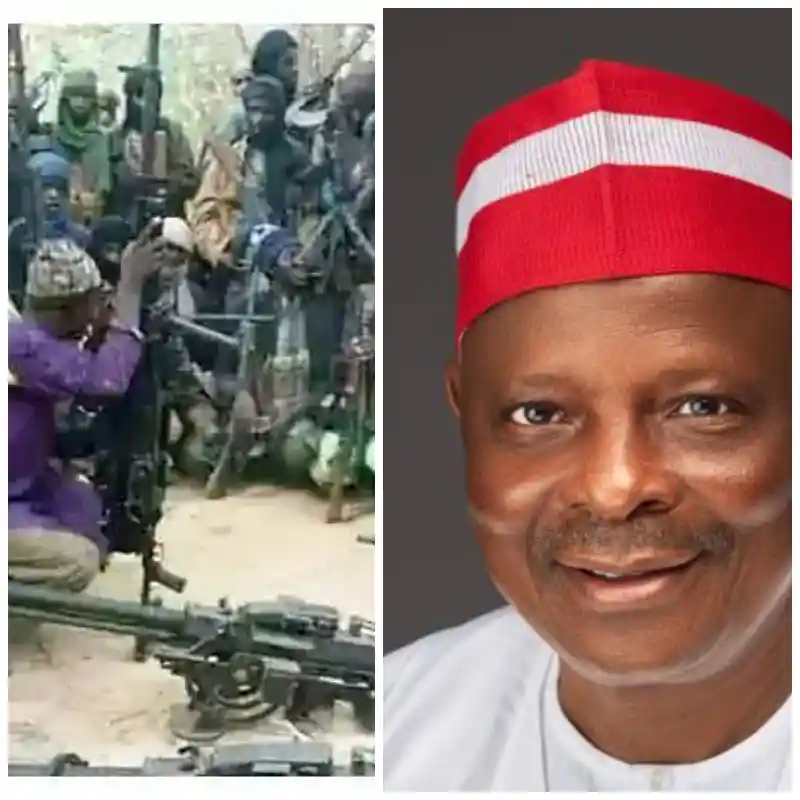
The United States Congress has introduced sweeping legislation targeting religious persecution in Nigeria, naming former Kano State Governor Rabiu Musa Kwankwaso and Fulani-ethnic militias among entities that could face sanctions and terror designations.
The bill, titled the Nigeria Religious Freedom and Accountability Act of 2026, was formally presented in Washington by Representatives Chris Smith of New Jersey and Riley Moore of West Virginia. It seeks to compel the U.S. Secretary of State to prepare a comprehensive report on ongoing religious violence and mass atrocities in Nigeria.
Ejes Gist News reports that the proposed law outlines targeted actions against individuals and groups accused of involvement in severe religious freedom violations. The legislation specifically recommends sanctions under the Global Magnitsky Human Rights Accountability Act, including visa bans and asset freezes.
Also Read: Electoral Act: Senate’s E-Transmission Approval Raises Fresh Questions
Lawmakers Cite Rising Violence in Nigeria
The sponsors of the bill said it was motivated by what they described as persistent attacks on Christian communities and non-radical Muslims in Nigeria.
“For years, Christians in Nigeria have faced unspeakable violence—churches burned, villages destroyed, families slaughtered—while the global community looked away,” Representative Moore said in a statement announcing the legislation.
Moore explained that he visited Nigeria as part of an investigation directed by U.S. President Donald Trump and witnessed the security challenges facing the country.
Representative Smith, Chairman of the House Foreign Affairs Africa Subcommittee, said the Nigerian government’s denial of religious persecution had enabled violence to escalate.
“The Nigerian government’s blatant denial of the religious persecution occurring within its borders has only enabled the religious-based violence in the country to fester,” Smith said.
Individuals and Groups Named for Possible Sanctions
A section of the proposed legislation lists specific individuals and organizations that should be considered for punitive measures. These include:
- Fulani-ethnic nomad militias in Nigeria
- Rabiu Musa Kwankwaso, former Governor of Kano State
- Miyetti Allah Cattle Breeders Association of Nigeria (MACBAN)
- Miyetti Allah Kautal Hore
The bill also calls on the U.S. Secretary of State to determine whether certain Fulani-ethnic militias qualify for designation as foreign terrorist organizations under U.S. immigration laws.
If approved, the law would require the Departments of State and Treasury to impose targeted sanctions on any individual or entity found responsible for religious persecution.
Broad Congressional Backing
The legislation enjoys the support of senior U.S. lawmakers, including House Appropriations Committee Chairman Tom Cole, House Foreign Affairs Committee Chairman Brian Mast, and several other influential members of Congress.
Mast described the bill as necessary to confront what he called brutal assaults against vulnerable communities.
“The free world cannot stand by as Christians face mass murders, kidnappings and brutal assaults at the hands of terrorist thugs and armed militias in Nigeria,” he said.
Cole added that defending religious liberty is both a moral duty and a vital American interest.
What the Bill Requires
Under the proposed law, the U.S. Secretary of State would be mandated to submit a detailed report to Congress covering multiple areas, including:
- Nigeria’s compliance with the International Religious Freedom Act
- Actions taken by the Nigerian government to prevent persecution and prosecute offenders
- Identification of individuals and entities sanctioned or under review
- Assessment of U.S. humanitarian and security assistance to Nigeria
- Evaluation of blasphemy laws and their enforcement
- Conditions of internally displaced persons
- Recommendations for further executive or congressional action
The bill further requires an investigation into whether U.S. security assistance to Nigeria risks enabling religious persecution.
Focus on Humanitarian Assistance
Another component of the legislation urges the United States to deliver humanitarian aid, co-funded by the Nigerian government, to communities affected by violence. It specifies that such assistance should be channeled through trusted faith-based and non-governmental organizations operating in Nigeria’s Middle Belt region.
Supporters of the bill argue that coordinated humanitarian intervention is necessary to protect displaced populations and rebuild devastated communities.
Next Steps
The Nigeria Religious Freedom and Accountability Act of 2026 has been referred to relevant congressional committees for further consideration. If passed, it would mark one of the most direct interventions by the United States in Nigeria’s internal security and human rights crisis.
American lawmakers said the legislation aligns with the Trump Administration’s policy of redesignating Nigeria as a Country of Particular Concern over religious freedom violations.
The bill represents a significant escalation in U.S. scrutiny of Nigeria’s handling of sectarian violence and could have far-reaching diplomatic and economic implications.