
How Donald Trump Was Impeached: A Comprehensive Account of the Two Historic Impeachments
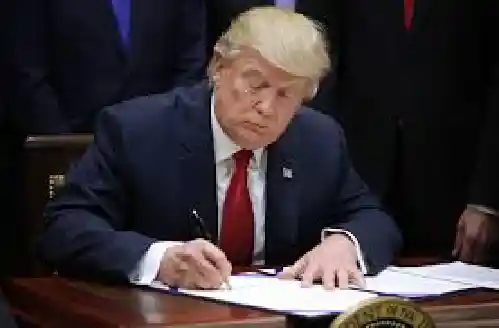
Donald Trump remains the only president in the history of the United States to have been impeached twice by the U.S. House of Representatives. The impeachments, which occurred during his first term in office, marked unprecedented moments in American constitutional and political history. They stemmed from two separate controversies, involved distinct articles of impeachment, and raised fundamental questions about presidential power, accountability, and the limits of executive authority.
This article provides a detailed, factual, and evergreen account of how Donald Trump was impeached, why the impeachment processes were initiated, how Congress conducted the proceedings, and how the U.S. Senate ultimately handled both cases.
Understanding Impeachment in the United States
Impeachment is a constitutional process outlined in Article I and Article II of the U.S. Constitution. It is the mechanism by which Congress can formally accuse and potentially remove a sitting president, vice president, or other federal officials for serious misconduct.
What Impeachment Means
Impeachment does not automatically remove a president from office. Instead, it involves two stages:
- Impeachment by the House of Representatives, which functions like an indictment.
- Trial by the Senate, which determines whether to convict and remove the official from office.
A simple majority vote in the House is required to impeach, while a two-thirds majority in the Senate is required for conviction and removal.
The Constitution specifies that impeachment may apply in cases of “treason, bribery, or other high crimes and misdemeanors,” a phrase that has been subject to legal and historical interpretation.
Background to Donald Trump’s Presidency
Donald Trump was inaugurated as the 45th president of the United States in January 2017 after winning the 2016 presidential election. His presidency was marked by sharp political polarization, frequent confrontations with Congress and the media, and ongoing debates over executive power.
From the early stages of his administration, Trump faced investigations into his conduct, business dealings, and interactions with foreign governments. Two of these controversies eventually led to formal impeachment proceedings.
Ejes Gist News reports that the impeachments were driven by separate events and legal theories, making Trump’s case unique in modern U.S. political history.
First Impeachment of Donald Trump (2019)
The Ukraine Controversy
The first impeachment arose from allegations that President Trump abused his office by pressuring Ukraine to investigate a domestic political rival ahead of the 2020 U.S. presidential election.
In 2019, a whistleblower complaint alleged that Trump had engaged in a phone call with Ukrainian President Volodymyr Zelensky in which he requested investigations into:
- Joe Biden, a former vice president and potential 2020 election opponent
- Hunter Biden, Joe Biden’s son, and his business dealings in Ukraine
The complaint also alleged that U.S. military aid approved by Congress had been withheld from Ukraine around the same period.
House Investigation and Hearings
The U.S. House of Representatives, controlled at the time by the Democratic Party, launched a formal impeachment inquiry in September 2019.
The investigation involved:
- Closed-door depositions
- Public hearings
- Testimony from U.S. diplomats, national security officials, and civil servants
Witnesses testified about concerns that U.S. foreign policy toward Ukraine had been used for personal political gain.
Articles of Impeachment (2019)
In December 2019, the House Judiciary Committee approved two articles of impeachment against Donald Trump:
Article I: Abuse of Power
This article alleged that Trump:
- Used the powers of the presidency to solicit foreign interference in a U.S. election
- Conditioned official acts on Ukraine announcing investigations that could benefit him politically
Article II: Obstruction of Congress
This article alleged that Trump:
- Directed executive branch officials not to comply with House subpoenas
- Refused to provide documents or testimony during the impeachment inquiry
House Vote on Impeachment
On December 18, 2019, the full House of Representatives voted on the articles of impeachment.
- Trump was impeached on both articles.
- The vote largely followed party lines.
- Donald Trump became the third U.S. president to be impeached, after Andrew Johnson and Bill Clinton.
Senate Trial and Acquittal (2020)
Senate Proceedings
The impeachment trial moved to the U.S. Senate in January 2020. Senators took an oath to serve as jurors, while House managers presented the case for conviction and Trump’s legal team presented his defense.
Key issues debated during the trial included:
- Whether Trump’s actions constituted “high crimes and misdemeanors”
- Whether additional witnesses should be called
- The scope of presidential authority in foreign policy
Final Senate Vote
In February 2020, the Senate voted on both articles:
- Trump was acquitted on the abuse of power charge.
- Trump was acquitted on the obstruction of Congress charge.
The Senate did not reach the two-thirds majority required for conviction. Trump remained in office and completed his first term.
Second Impeachment of Donald Trump (2021)
Events Leading to the Second Impeachment
The second impeachment followed events connected to the certification of the 2020 U.S. presidential election.
After losing the election to Joe Biden, Trump repeatedly claimed, without judicial confirmation, that the election results were fraudulent. These claims were rejected by multiple courts, state election officials, and federal agencies.
On January 6, 2021, a large group of Trump supporters gathered in Washington, D.C., where Trump addressed them at a rally. Later that day, a crowd breached the U.S. Capitol building as Congress met to certify the electoral results.
The incident disrupted the constitutional process and led to injuries, deaths, and extensive damage to the Capitol.
House Response
In the aftermath of the Capitol breach, House lawmakers moved quickly to initiate a second impeachment process.
The House concluded that Trump’s actions before and during January 6 contributed to the violence and posed a threat to democratic governance.
Article of Impeachment (2021)
Unlike the first impeachment, the second impeachment involved a single article:
Article: Incitement of Insurrection
This article alleged that Trump:
- Repeatedly made false claims about election fraud
- Encouraged supporters to challenge the election outcome
- Used rhetoric that contributed to the January 6 violence at the Capitol
House Vote on Second Impeachment
On January 13, 2021, the House of Representatives voted to impeach Trump for a second time.
- The vote included members from both major political parties.
- Donald Trump became the first U.S. president to be impeached twice.
Second Senate Trial and Outcome
Post-Presidency Trial
By the time the Senate trial began, Trump had already left office following the inauguration of President Joe Biden. This raised constitutional questions about whether a former president could be tried and convicted.
The Senate ultimately determined that it had jurisdiction to proceed with the trial.
Arguments Presented
House impeachment managers argued that:
- Trump’s conduct endangered the constitutional order
- Failure to convict would set a dangerous precedent
Trump’s defense team argued that:
- His speech was protected under the First Amendment
- He was no longer in office and therefore not subject to conviction
Senate Vote and Acquittal
In February 2021, the Senate voted on the article of impeachment.
- A majority of senators voted to convict.
- The vote fell short of the required two-thirds threshold.
Trump was acquitted for the second time.
Historical Significance of Donald Trump’s Impeachments
Donald Trump’s impeachments are historically significant for several reasons:
- He is the only U.S. president impeached twice.
- The impeachments addressed different types of alleged misconduct.
- Both cases tested constitutional interpretations of executive accountability.
- The proceedings deepened political divisions within Congress and the electorate.
Historians and constitutional scholars continue to analyze the long-term implications of these events for the American presidency.
Key Differences Between the Two Impeachments
Nature of Allegations
- First impeachment focused on foreign policy and election interference.
- Second impeachment focused on domestic unrest and constitutional order.
Timing
- First impeachment occurred during Trump’s presidency.
- Second impeachment occurred at the end of his term and continued after he left office.
Number of Articles
- First impeachment included two articles.
- Second impeachment included one article.
Bipartisan Support
- Second impeachment saw more bipartisan support in the House compared to the first.
Impeachment vs. Criminal Liability
It is important to distinguish impeachment from criminal prosecution.
- Impeachment is a political and constitutional process.
- It does not determine criminal guilt or innocence.
- Acquittal in the Senate does not prevent other legal proceedings under state or federal law.
The Constitution explicitly states that impeachment judgments do not preclude subsequent legal accountability.
Why the Trump Impeachments Matter
The impeachments of Donald Trump have become central reference points in discussions about:
- Limits of presidential power
- Congressional oversight
- Election integrity
- The resilience of democratic institutions
They also underscore the role of impeachment as a tool of constitutional governance rather than a criminal mechanism.