
Dollar to Naira Exchange Rate Today Thursday, November 27, 2025
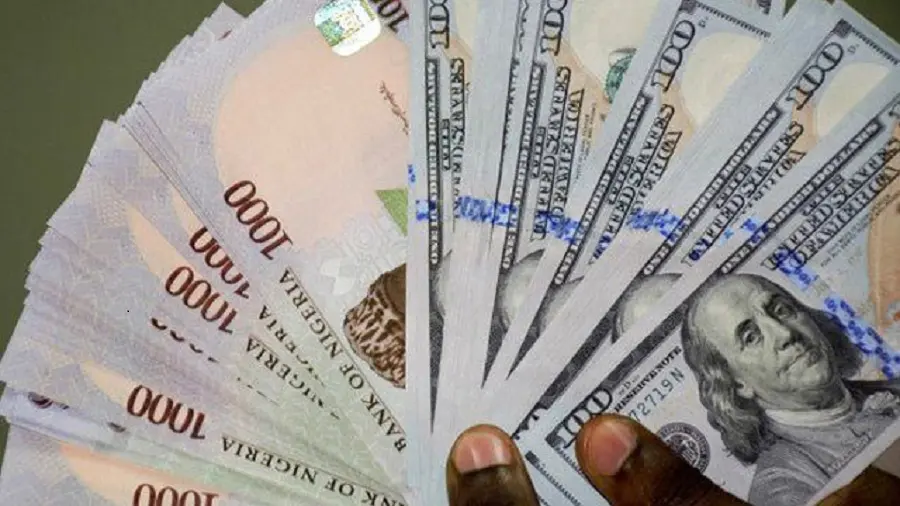
The foreign exchange market opened today, Thursday, November 27, 2025, with the naira recording slight movements across official and parallel markets amid continued concerns over inflation, rising import costs, and household spending pressure across the country.
Ejes Gist Media reports that the latest exchange rate figures reflect ongoing volatility that is shaping both national economic planning and the daily financial realities of Nigerians who depend on imported goods, foreign services, and diaspora remittances.
Official and Parallel Market Rates Today
According to verified financial data from official trading platforms and bureau-de-change operators:
- Official Market (CBN / NAFEM Rate):
The naira traded around ₦1,446 per US$1 in the Nigerian Autonomous Foreign Exchange Market. This rate shows marginal movement compared to mid-week trading levels. - Parallel (Black Market) Rate:
Reports from key trading hubs in Lagos, Abuja, Port Harcourt, and Kano indicate that the dollar exchanged between ₦1,460 and ₦1,465 per US$1 in the unofficial market. - Peer-to-Peer (P2P) Trading:
The P2P market used by freelancers, crypto traders, and SMEs recorded prices hovering around ₦1,455 to ₦1,462 per US$1, depending on transaction size and settlement time.
Nigerians Continue to Adjust Daily Living Habits
While exchange rate figures appear to be mere economic indicators on paper, the consequences are deeply personal for millions of households. Across Delta, Lagos, Abuja, and other regions, families are adapting their spending patterns as the rising cost of imported food items, pharmaceuticals, and essential goods continues to influence daily choices.
At Ogbe-Iwase Market in Warri, traders say the unstable naira makes pricing unpredictable. A frozen food seller explained that every slight change in the dollar “reshapes the entire supply chain,” affecting transportation, storage, and final retail prices. She noted that customers now buy in smaller quantities, often asking for half portions instead of full purchases, showing how exchange rate shifts shape consumer behaviour at the grassroots level.
In Asaba, a parent whose children study abroad shared that school fees and upkeep costs have become a monthly challenge. “Every move in the dollar affects what I send to my child,” he said, adding that even modest increases in exchange rates translate into substantial jumps in remittance needs.
Small business owners are also feeling the pressure. Tailors who import fabrics, electronics repairers who source parts online, and pharmaceutical retailers who rely on foreign suppliers all say that volatility complicates planning and reduces profit margins. For many SMEs in Delta State, forex fluctuations are no longer distant policy discussions; they directly determine whether businesses remain open or shut down.
Why the Naira Is Moving Today
Economic analysts link today’s rates to a combination of local and global factors:
- Dollar-demand pressure from importers clearing goods for the year-end period
- Slower foreign inflows from investors observing market direction
- Increased reliance on the parallel market due to access challenges
- Ongoing inflationary trends linked to supply chain costs
- Global currency movements against the dollar
Though policymakers have introduced several interventions to stabilise supply and promote transparent FX management, currency pressure remains a key feature of Nigeria’s financial landscape.
Effect on Businesses and Local Markets
1. Importers and Retailers
Businesses dependent on foreign supplies say higher rates reduce inventory levels, delay orders, and increase operational costs. Supermarkets and pharmacies particularly record price changes every few weeks, sometimes within the same month.
2. Transport and Logistics
Fuel, spare parts, and mechanical components—often imported—are priced in relation to the dollar. Transporters across Delta State mention that vehicle maintenance has become significantly more expensive.
3. Students and Families Abroad
Exchange rate instability increases the burden on parents supporting dependents in countries like the UK, Canada, and the US, where rent, tuition, and utilities continue rising in dollar or pound equivalents.
4. Local Producers
Manufacturers that rely on imported raw materials face dual challenges: higher production costs and shrinking customer purchasing power.
How Traders Are Adjusting Today
On the ground, traders and bureau-de-change operators report that demand slowed in the early hours of today’s trading session, with some buyers waiting for clarity on whether the naira will appreciate further in the official window. Others prefer smaller transactions to avoid losses should rates swing unpredictably.
A wholesaler in Onitsha who supplies goods to businesses in Delta State explained that many customers now request credit—and sometimes repayment in naira equivalents pegged to black-market rates. This shift, he said, demonstrates how FX movements now influence informal credit systems.
Sentiments From Small Business Owners
- A Clothe-vendor in Enerhen Market:
“We now price in line with the parallel market because suppliers collect money based on black-market rates. Customers think we’re increasing prices on purpose.” - A Tech Repair Specialist in Udu:
“Phone screens, laptop parts, and imported tools are tied to the dollar. A single replacement screen that used to cost ₦15,000 now follows dollar fluctuations. Customers are shocked each time.” - A Pharmacist in Asaba:
“Many essential drugs are imported. Even slight changes in forex reflect immediately in wholesale invoices.”
These voices reflect a recurring theme: households and businesses are recalibrating strategies to survive currency movements.
Broader Economic Context
Economists note that Nigeria’s foreign exchange market has undergone several structural reforms in recent years, including floating the naira and consolidating official windows. While the reforms aim to boost transparency and attract investment, short-term volatility persists as the market searches for equilibrium.
International factors—such as global interest rates, oil prices, and geopolitical developments—continue to influence Nigeria’s foreign earnings and FX reserves, indirectly shaping the naira’s performance.