
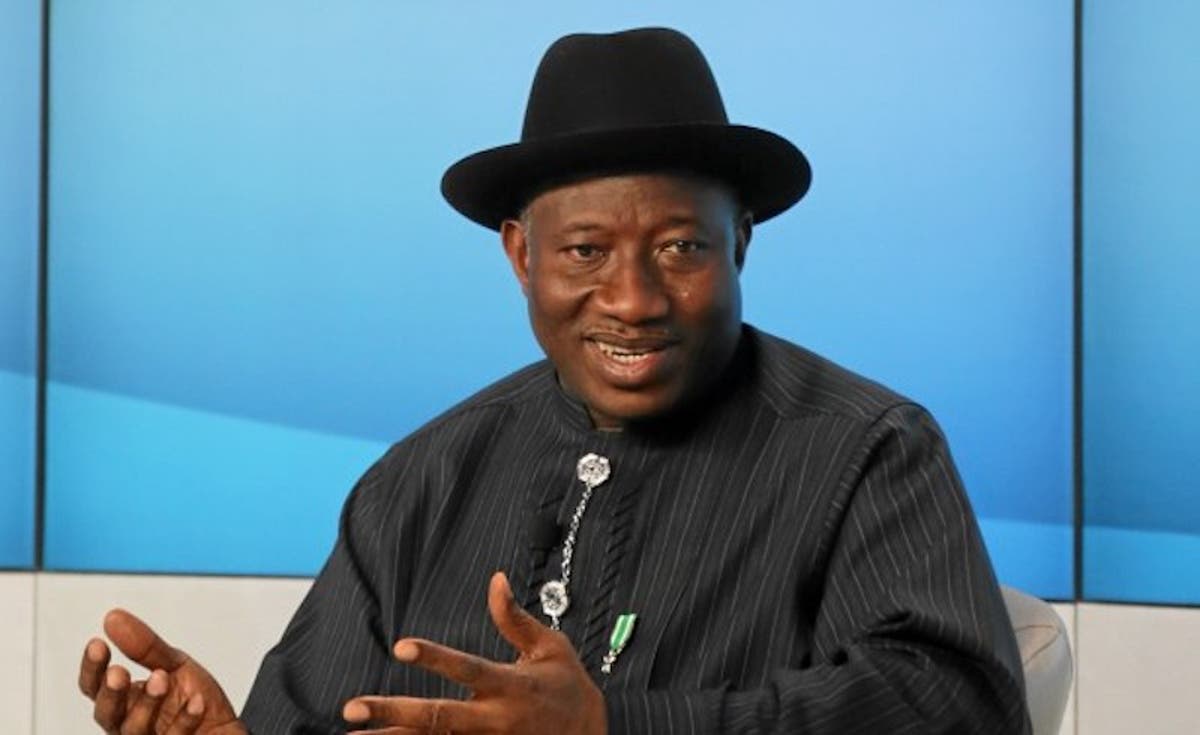
EXCLUSIVE: 2027 Politics — Jonathan Weighs ADC Alliance as Associates Reject Calls to Back Tinubu

Advertisements
As Nigeria gradually moves toward the 2027 general election, quiet realignments among opposition leaders are beginning to shape what could emerge as one of the most consequential political contests since the country’s return to democratic rule in 1999.
At the centre of these unfolding consultations are former President Goodluck Jonathan, former Vice President Atiku Abubakar, and the African Democratic Congress (ADC), which is increasingly being viewed by opposition power brokers as a possible platform for a broad-based coalition ahead of the next presidential race.
Ejes Gist News reports that internal disagreements within the emerging opposition bloc—particularly surrounding Atiku’s continued insistence on contesting the presidency—are slowing down formal alignments with the ADC. Multiple sources familiar with the talks say these unresolved issues have prompted several influential figures, including Jonathan, to adopt a wait-and-see approach.
Advertisements
Also Read: AFCON 2025: Super Eagles Through to Semi-Finals, Set to Face Hosts
Jonathan and the ADC Calculations
Jonathan, who lost his re-election bid in 2015 to former President Muhammadu Buhari of the All Progressives Congress (APC), is understood to retain considerable goodwill among influential interests within the ADC. Party insiders say that, should he formally align with the party, he would immediately rank among the most prominent figures associated with its 2027 ambitions.
Advertisements
However, uncertainty over zoning remains a major stumbling block. Sources say the ADC has yet to make a clear commitment on whether its presidential ticket will be zoned to the South in 2027, a decision many potential entrants consider critical before declaring their intentions.
Several opposition figures across different geopolitical zones are reportedly holding back, pending clarity on the issue of regional balance. For many of them, zoning is viewed not merely as a political arrangement but as a stabilising convention within Nigeria’s fragile federal structure.
Jonathan’s Position on the 2027 Presidency
Sources close to Jonathan, most of whom are aligned with the Peoples Democratic Party (PDP), have remained deliberately cautious in public comments about his next political move. Privately, however, associates say the former president has taken a firm position on one key issue: he is unwilling to support a northern presidential candidate in 2027.
One insider told Ejes Gist News that Jonathan’s stance is not driven by ethnic or religious considerations, nor by personal animosity toward Atiku or other northern political leaders. Rather, the source said, it is rooted in what Jonathan considers a matter of equity and constitutional balance.
“President Jonathan believes strongly in fairness and justice,” the source said. “After eight uninterrupted years of northern presidency under Buhari, he feels the South should be allowed to complete its own eight-year cycle, running through 2031. Supporting a northern candidate in 2027 would contradict that principle and undermine the expectations of many in the South.”
The source added that Jonathan is acutely conscious of how his political choices would be interpreted across the country and is determined to avoid actions that could further inflame regional sensitivities.
Not a Personal Ambition
Contrary to speculation, associates insist Jonathan is not fixated on becoming a presidential candidate himself. While he remains constitutionally eligible to contest in 2027—a matter that continues to generate legal debate—those close to him say personal ambition is not his primary motivation.
Instead, Jonathan is said to be open to supporting any credible southern candidate who emerges through a transparent and broadly acceptable process, whether within the ADC or another opposition platform.
Among the names reportedly being discussed in private political circles are former Labour Party presidential candidate Peter Obi and former Minister of Transportation Rotimi Amaechi, alongside other potential southern aspirants.
“He does not believe he must be the candidate,” the source emphasised. “His concern is about balance, justice, and national cohesion, not about returning to power at all costs.”
Pressure on Atiku Within Opposition Ranks
Within the evolving opposition framework, pressure is reportedly mounting on Atiku to reconsider his long-standing presidential ambition. Some stakeholders argue that his continued pursuit of the ADC ticket could complicate coalition-building efforts rather than strengthen them.
Critics within the opposition point to Atiku’s age—he would be over 80 by the time of the 2027 election—as well as the physical and mental demands of the presidency. Others caution that presenting another northern candidate in 2027 could strain the informal North–South power rotation that many believe has helped moderate political tensions over the years.
Despite these concerns, Atiku has shown no indication of stepping aside. His aides have consistently dismissed reports suggesting a possible change of plans, reinforcing perceptions that the 2027 race has become a deeply personal project.
Some opposition figures privately fear that this stance may discourage other political heavyweights from fully committing to the ADC-led coalition.
Waning Confidence in the PDP
Many political observers had assumed that Jonathan, should he choose to re-enter active partisan politics, would do so through the PDP, the party on whose platform he rose to the presidency. However, associates of the former president say confidence in the party has significantly eroded.
According to them, years of internal crises, leadership disputes, and unresolved factionalism have weakened the PDP’s organisational capacity.
One senior PDP figure, speaking privately, described the party as “a vehicle with all four tyres deflated,” warning that relying on it as a viable platform for 2027 could prove futile.
This growing disillusionment, sources say, is one of the factors prompting Jonathan’s allies to explore alternative platforms such as the ADC.
Rejection of Calls to Back Tinubu
Equally significant is Jonathan’s reported refusal to support President Bola Tinubu for a second term in 2027. Sources say some of the appeals urging him to back Tinubu have come from former associates and even kinsmen from the South-South region.
According to a source close to the former president, supporting Tinubu and the APC would amount to “self-indictment,” given Jonathan’s experience after leaving office in 2015.
“The same political machinery that branded him clueless and labelled his administration the most corrupt in Nigeria’s history is now seeking his endorsement,” the source said. “Backing the APC would erase the reality of what he went through and validate narratives that were used against him.”
Ongoing Consultations
Recent political movements suggest that Jonathan continues to consult widely across party and factional lines. His recent private meeting with a PDP faction led by former Minister of Special Duties Tanimu Turaki has further fuelled speculation about his long-term intentions.
While Turaki publicly stated that the discussions focused on reconciling the fractured PDP, insiders say the talks may have broader strategic implications.
Turaki, alongside Bauchi State Governor Bala Mohammed, was among Jonathan’s closest political allies during his presidency, adding another layer of intrigue to the ongoing consultations.
As deliberations continue behind closed doors, Jonathan’s eventual decision—whether to formally align with the ADC, support a southern consensus candidate, or remain politically neutral—could significantly reshape the 2027 electoral landscape, with far-reaching consequences for both national and state-level contests.
